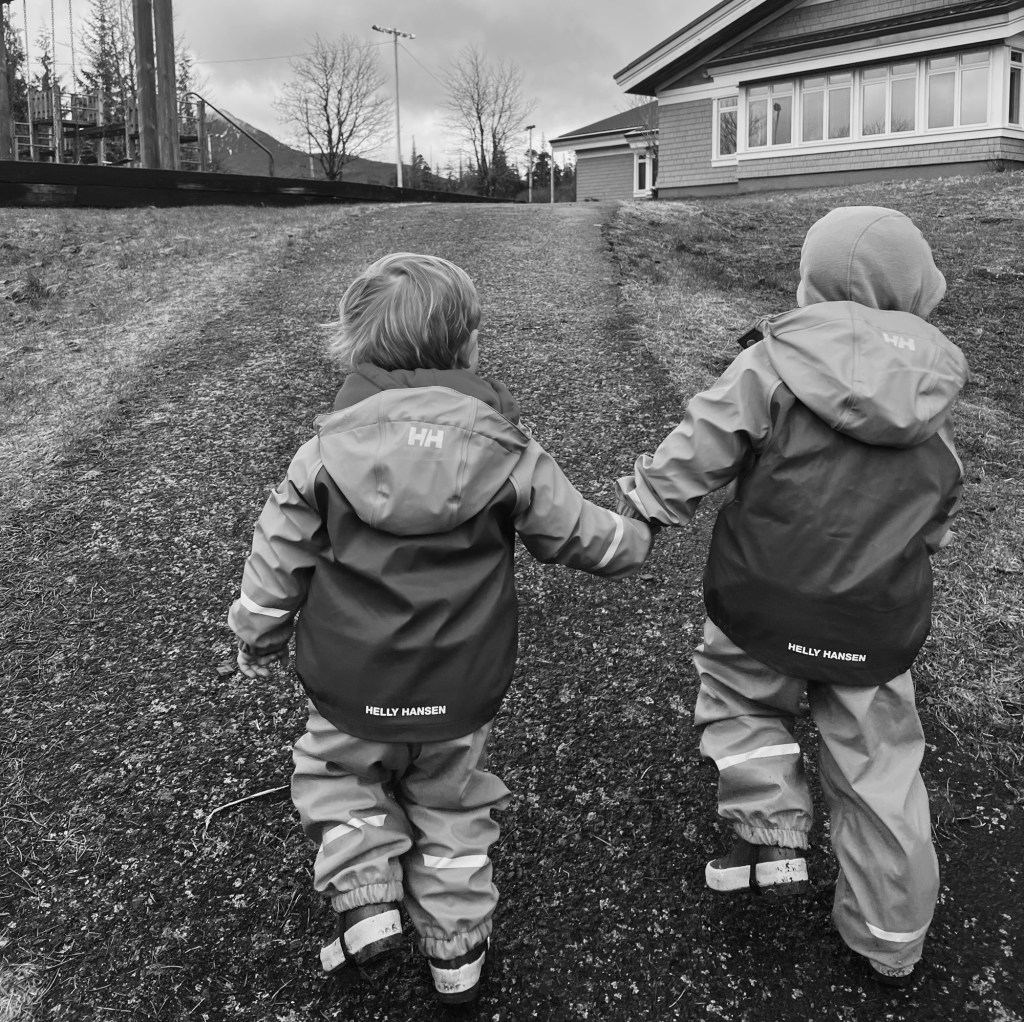
Raising boys in rural Alaska comes with its own set of strong expectations — split fire wood, fix a boat kicker, hike through sideways rain. But raising emotionally intelligent boys here, and doing it through the lens of faith, takes the conscious effort and guidance of an honest parent. A true adventure and journey is found in not only raising strong kids, but kind adults.
We live where independence is a badge of honor. Boys are taught early to be tough, to endure, to be strong. That grit is good, it supplies them with a diverse skill set as a grown adult. It’s necessary. But if we’re not careful, it can crowd their softness. And the world needs men who can do both.
So how do we raise boys who can both clean a deer and name their feelings? Who can stand tall through storms and also kneel humbly?
These are goals I think about often while raising my boys. In this social environment and generation they will be challenged in ways my generation was not, from technology, social media influence, and an overall distrust in society and government. Am I perfect in achieving them every day? No, but nonetheless these are the goals I think about and work towards daily.
1. Model it first — with words and with presence
Whether you live in a big city, a fishing village, or down an old gravel road in Ketchikan, your young boys are watching you. Children learn best not from being told but by observing. If we want our sons to be emotionally intelligent and anchored in faith, we have to live it. That means showing our own emotions, not hiding them. It means you modeling emotion by saying things like “I felt frustrated today, but I prayed and it helped me” or “I’m really sorry for the way I reacted earlier — I should’ve taken a breath and slowed down”
This is strength. This is leadership. And this is Jesus: strong, steady, and unafraid to admit a fault.
2. Let faith be your compass
In a world that frequently defines masculinity by dominance and brute strength, Christ teaches us different: humility, grace, self-control. God gives us the ultimate guide for raising kind compassionate little boys — love, joy, peace, patience, kindness, goodness, faithfulness, gentleness, and self-control.
3. Normalize difficult conversations
Life in rural Alaska is often quiet and isolated, emotional conversations don’t always come about naturally. But make space for them. I will often prompt conversations thoughtfully with intention. In the truck on the way to town. While walking a trail. Don’t just ask “How was your day?” instead, ask “What was the best part and hardest part of your day?” Encouraging reflection on their emotions, ask “What do you think God is teaching us right now?” And share your responses with them too!
4. Let them feel deeply and still be rugged tough kids
There’s a silent black cloud that society hangs over the heads of little boys while growing up, that feelings make you weak. But the truth is, emotional intelligence is what helps our boys be resilient, not just reactive. Let them cry. Let them journal. Let them talk about doubt and anxiety and anger and show them how to bring it all to God. You can demonstrate the tools and encourage them to name what they feel and trust that their feelings are not a threat, but a deeper connection to truth.
5. Teach service as strength
The Bible encourages us to serve not to dominate. Help your sons see love in service: helping a friend in school, praying for someone, showing up to help somebody even when it’s inconvenient. Help them find their confidence not just in being tough or the most resilient, but in being dependable, humble, and kind. And as a parent, I see it important to be equally proud of them in both situations.
6. Let nature be a teacher, too
Alaska is a classroom devoted to exploration and adventure. Let them hike. Let them explore. Let them learn faithfulness through all seasons of life, from the tides to the salmon runs. Use the land around you to your advantage teach patience, stillness, and wonder. Let them know God isn’t just at church He’s in the mountains and oceans too.
At the end of the day, we’re not just raising little boys. We’re raising future fathers, husbands, brothers, and leaders.
The goal isn’t to make them “tough men” who are embarrassed by their feelings and only pray at church on Sunday’s.
It’s to raise wholesome men, ones who can cry when their heart hurts, speak truth openly, live kindly and boldly, learn with grace, and lead with quiet strength.

 trailandtruth.blog
Leave a comment